
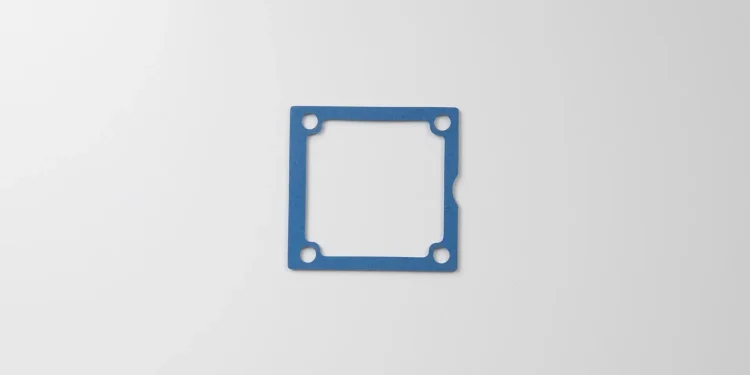
A conductive seal is an elastomeric gasket engineered to provide both environmental sealing and electrical conductivity. These materials prevent water, dust, and fuel ingress while simultaneously creating a low‑resistance electrical path that blocks electromagnetic interference (EMI) and radio‑frequency interference (RFI).
Conductive seals are essential in military electronics, aerospace platforms, communications systems, radar housings, and high‑density connectors where EMI shielding and environmental protection must occur in the same interface.
SSP makes conductive seals and gaskets. Keep reading to learn more, or contact us for a quote.
How Conductive Seals Work
Conductive elastomers achieve EMI shielding through particle‑to‑particle conduction within the silicone or fluorosilicone matrix. When compressed, the conductive particles form a continuous electrical network that:
Reduces contact resistance
Provides grounding and bonding between mating surfaces
Attenuates EMI/RFI across a broad frequency range
Maintains shielding effectiveness even under vibration and thermal cycling
Typical shielding effectiveness ranges from 60–120 dB, depending on filler type, compression, and interface design.
Material Types Used in Conductive Seals
Conductive seals are typically made from particle‑filled silicone or fluorosilicone. The filler determines conductivity, corrosion behavior, and shielding performance.
Common Filler Systems
Silver‑Aluminum (Ag/Al) — High shielding, excellent for aluminum housings
Silver‑Copper (Ag/Cu) — Very high conductivity; used in controlled environments
Silver‑Glass (Ag/Glass) — Non‑corrosive, stable, used in medical and low‑corrosion applications
Nickel‑Graphite (Ni/C) — Cost‑effective commercial EMI shielding
Nickel‑Aluminum (Ni/Al) — Good shielding with improved galvanic compatibility
Base Elastomer Options
Silicone — General‑purpose EMI shielding, wide temperature range
Fluorosilicone — Required for fuel, oil, and solvent exposure (aerospace, defense, automotive)
Conductive Seal vs. Conductive Elastomer vs. EMI Gasket
These terms are related but not identical.
| Term | Meaning | Typical Use |
|---|---|---|
| Conductive Seal | A gasket providing both EMI shielding and environmental sealing | Connector gaskets, enclosure interfaces |
| Conductive Elastomer | The material itself (particle‑filled silicone/fluorosilicone) | Raw material for molded or die‑cut gaskets |
| EMI Gasket | Any gasket designed for EMI shielding (metal mesh, fabric‑over‑foam, conductive elastomer) | Enclosures, doors, panels |
Applications of Conductive Seals
Conductive seals are used anywhere EMI shielding and environmental sealing must occur simultaneously.
Aerospace & Defense
Avionics enclosures
Radar and sensor housings
Military communications equipment
Missile guidance systems
Harsh‑environment connectors
Electronics & Communications
RF modules
Shielded enclosures
Base stations
Satellite communications
Industrial & Harsh Environments
Fuel‑exposed systems (fluorosilicone)
Outdoor electronics
Marine and salt‑fog environments
Performance Characteristics Engineers Evaluate
Conductive seals must meet both mechanical and electrical requirements.
Mechanical Properties
Durometer (typically 40–80 Shore A)
Compression set
Tensile strength & elongation
Tear resistance
Temperature range (–55°C to +160°C typical; higher for specialty grades)
Electrical Properties
Volume resistivity
Surface resistivity
Shielding effectiveness (dB)
Contact resistance under compression
Environmental Resistance
Fuel and oil resistance (fluorosilicone)
Salt fog and corrosion behavior
UV and ozone stability
Comparison of Conductive Elastomer Types
Note: SSP makes QPL certified MIL-DTL-83528 silicones.
| Material Type | Best For | Pros | Limitations | Typical Specs |
|---|---|---|---|---|
| Silver‑Aluminum Silicone | Military/aerospace aluminum housings | High shielding, corrosion‑resistant | Higher cost | MIL‑DTL‑83528 Type B |
| Nickel‑Graphite Silicone | Commercial EMI shielding | Cost‑effective | Lower shielding | MIL‑DTL‑83528 Type D |
| Silver‑Glass Silicone | Medical, low‑corrosion environments | Non‑corrosive, stable | Lower conductivity | MIL‑DTL‑83528 Type C |
| Silver‑Copper Silicone | High‑performance EMI | Very high conductivity | Corrosion risk in salt fog | MIL‑DTL‑83528 Type A |
| Conductive Fluorosilicone | Fuel/oil exposure | Chemical resistance | Higher cost | MIL‑DTL‑83528 Type F |
Design Considerations for Conductive Seals
To ensure proper EMI performance:
Compression: Typically 10–30% for optimal conductivity
Flange design: Uniform compression prevents leakage paths
Surface finish: Rough surfaces increase contact resistance
Galvanic compatibility: Match filler to housing metal
Gasket geometry: O‑rings, die‑cut shapes, molded profiles
FAQs About Conductive Seals
How much compression is required for EMI shielding?
Most conductive elastomers require 10–30% compression to achieve stable electrical contact and shielding performance.
What is the difference between conductive silicone and conductive fluorosilicone?
Fluorosilicone provides fuel and solvent resistance, making it essential for aerospace and defense environments where silicone would degrade.
What MIL specifications apply to conductive seals?
The primary spec is MIL‑DTL‑83528, which defines filler types, mechanical properties, and shielding performance.
Can conductive seals replace metal EMI gaskets?
Yes — in many applications, conductive elastomers provide better environmental sealing and comparable EMI performance.
How do I choose the right filler for my housing material?
Match filler to housing to avoid galvanic corrosion:
Aluminum housings → Silver‑Aluminum
Mixed metals → Nickel‑Graphite
Corrosion‑sensitive environments → Silver‑Glass