Summary: This article explains how to select USP Class VI silicones from Specialty Silicone Products (SSP). Our SSP2390 family of elastomers is platinum-cured for high purity.
Introduction
A USP Class VI silicone elastomer can provide the right balance between cost savings and patient protection. However, medical manufacturers still need to protect themselves against supplier cost-cutting that can invalidate compliance.
It’s essential to to evaluate all of USP Class VI silicone elastomer’s attributes, such as color and durometer, and to choose materials that have passed third-party testing.
This article explains what to look for.
Ingredients and Certifications
Medical manufacturers need to ask their suppliers for certificates, or certs. Make sure you understand the difference between a Certificate of Analysis (COA) and a Certificate of Conformance (COC).
- COAs report the test results for a specific batch of materials.
- COCs simply attest to a medical silicone’s compliance.
Why does this matter? If the formula for a USP Class VI silicone changes, a COC from a supplier’s Quality Department may contain out-of-date or inaccurate information.
When you choose medical grade silicones from SSP, you can get a COA with every batch.
Colors
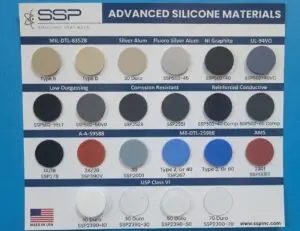
Normally, USP Class VI silicones are translucent. However, a compounder like SSP can add custom colors to support distinctive medical product designs.
What designers need to consider, however, is that the pigments that are used may require additional testing to demonstrate compliance.
For example, SSP has tested the translucent base elastomer in the SP2390 series for USP Class VI compatibility. We can pigment this materials in red, white, black, or other colors, but you’ll need to determine material suitability and regulatory compliance.
Durometers
The durometer, or hardness, of a USP Class VI silicone is also important since it determines the elastomer’s compressibility, which supports sealing.
The SSP2390 family of elastomers is available in durometers from 10 to 80 (Shore A) to support different amounts of compression.
Curing Systems
The curing system that is used is especially important. Platinum-cured silicones are cleaner than peroxide-cured silicones and produce less off-gassing, the release of fumes or gases that may contain volatile organic compounds (VOCs).
Platinum curing also offers greater control over cure rates and cross-linking for silicones that are more consistent in terms of appearance. In addition, platinum-cured silicones also have stronger physical properties and lower shrinkage values.
Tolerances, Sizes, and Lead Times
Finally, it’s important to consider the tolerances, sizes, and lead times of USP Class VI silicones.
- When sheets are compression molded, they come in standard sizes based on available tooling.
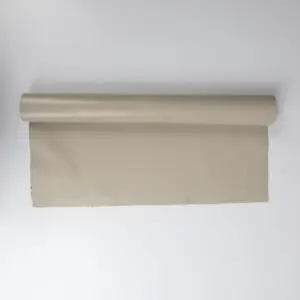
- Continuous roll technology can produce ten times as many sheets per hour, and with tight tolerances. Importantly, rolls can also be converted to custom sheet sizes.
Ask SSP for a USP Class VI Silicone Elastomer
Are you ready to request a quote or discuss your application? Contact SSP.