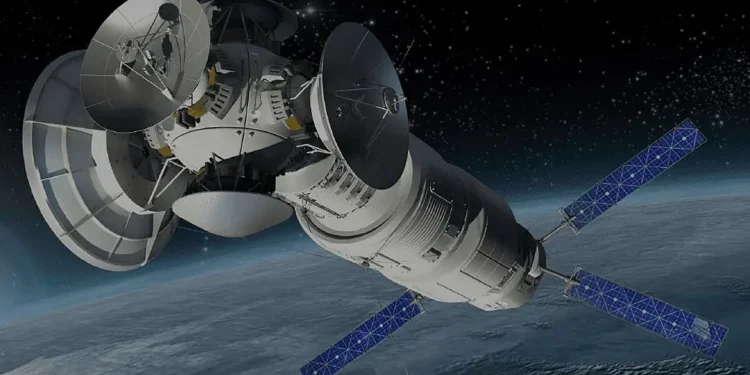
Silicones for space technology are enabling applications ranging from satellite services and space exploration to Earth observation, defense and security, and scientific research. From satellites and ground stations to rockets, spacecraft, and launch services, Tier 1 suppliers like Space X, Blue Origin, and the major defense contractors need silicone gaskets made from specialized materials.
For fabricators who want to provide these high-value products, partnering with the right material supplier is mission-critical. Specialty Silicone Products (SSP) makes silicones that have low levels of outgassing and extreme low-temperature resistance. SSP also manufactures space-grade silicones that provide EMI shielding, including a low-durometer material with UL-94 V0 flame resistance.
Keep reading to learn more and contact SSP if you need the following materials.
Low Outgassing, Low Temperature Silicone with Space Heritage
SSP2575 is a low outgassing, low temperature silicone with a history of use in space programs. This 50-durometer space-grade elastomer remains flexible at -116°C (-177°F). SSP2575 is available as a ready-to-mold compound or as compression molded sheet stock in a range of standard and custom sheet sizes.
Most silicones release gases at low pressures like the near-perfect vacuum of space. This can cloud optics and sensors or interfere with electronics. SSP2575 passes ASTM E595 outgas testing, which is based on the NASA low outgassing standard, and has a Total Mass Loss (TML) of 0.17%. Download the third-party Outgas Report for additional details.
Low Outgassing, Low Temperature Silicone with EMI Shielding
SSP-502-55LT is a low outgassing, low temperature silicone that’s used in EMI gaskets and EMI O-Rings. This 55-durometer EMI shielding silicone has a TR-10 low-temperature capability of -70°C (-94°F). TR-10 is the temperature at which a vulcanizate retracts 10%. The TR Test is part of ASTM D1329, a standard test method for evaluating a rubber’s retraction at low temperatures.
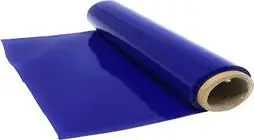
For an electrically conductive silicone, SSP-502-55LT can withstand very low temperatures. This low outgassing silicone passes the ASTM E595 test with a TML of 0.15% and has a shielding effectiveness greater than 113 dB for the 20 MHz to 10 GHz frequency band. Gasket fabricators can choose sheets, rolls, or ready to mold compounds.
Low Outgassing, Low Durometer, Flame-Retardant Silicone with EMI Shielding
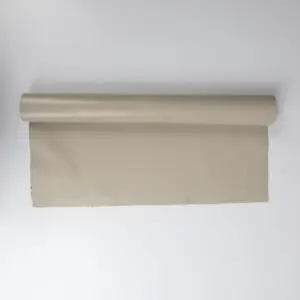
SSP-502-40-V0 is a 40-durometer silicone for space technology that combines ASTM E595 low outgassing with proven levels of EMI shielding. It has a UL-94 V0 flame rating, the most stringent rating under the UL-94 standard for the fire testing of polymers. Gasket fabricators can choose sheets or rolls, including slit-width rolls with a pressure sensitive adhesive (PSA) applied.
This independently tested silicone can be used in place of GORE GS2100, a discontinued EMI shielding material from W.L. Gore. Applications for SSP-502-V0 include microwave equipment, high frequency cable connectors, telecommunications equipment, and wireless infrastructure. SSP502-40-V0 has a typical shielding effectiveness of greater than 113 dB for the 20 MHz to 10 GHz band.
Ask SSP for Silicones for Space Technology
Gasket fabricators who pursue opportunities in space technology can gain access to a global market that’s predicted to grow from $512 USD billion in 2025 to USD $978 billion by 2034. SSP supplies the space-grade silicones that fabricators need, and with low minimum order quantities and short lead times.
Contact SSP for more information, and look for us at the Satellite Show (SATSHOW) 2026.
FAQ: Silicones for Space Technology
What makes silicone materials suitable for space applications
Space‑grade silicones offer low outgassing, extreme temperature stability, radiation resistance, and long‑term durability in vacuum environments. These properties make them ideal for spacecraft, satellites, launch vehicles, and space instrumentation.
Why is low outgassing important in space environments?
Outgassed volatiles can condense on optics, sensors, thermal control surfaces, and other contamination‑sensitive components. Low‑outgassing silicones help prevent residue buildup and meet NASA ASTM E595 requirements for TML and CVCM.
Do SSP’s space‑grade silicones meet NASA outgassing standards?
Yes. Many SSP formulations are engineered to meet or exceed NASA ASTM E595 outgassing limits, including low Total Mass Loss (TML) and low Collected Volatile Condensable Materials (CVCM).
Can silicone withstand extreme temperatures encountered in space?
Space‑grade silicones maintain flexibility, sealing performance, and mechanical integrity across extreme temperature swings—from cryogenic conditions to high‑heat exposure during launch and operation.
Are radiation‑resistant silicone materials available?
Yes. SSP offers silicone formulations designed to resist ionizing radiation, making them suitable for high‑radiation orbits, deep‑space missions, and long‑duration exposure environments.
Are fuel‑ and solvent‑resistant silicones used in space systems?
Fluorosilicone versions provide resistance to fuels, oils, hydraulic fluids, and aggressive chemicals, making them ideal for propulsion systems, fuel handling, and spacecraft fluid management.
What applications commonly use space‑grade silicone materials?
These materials are used in satellites, spacecraft structures, optical instruments, vacuum systems, propulsion assemblies, thermal control systems, and high‑reliability aerospace electronics.
Can SSP customize silicone materials for mission‑specific requirements?
Absolutely. SSP can tailor durometer, filler system, thickness, cure chemistry, and outgassing performance to meet the exact needs of spacecraft designers and aerospace engineers.