
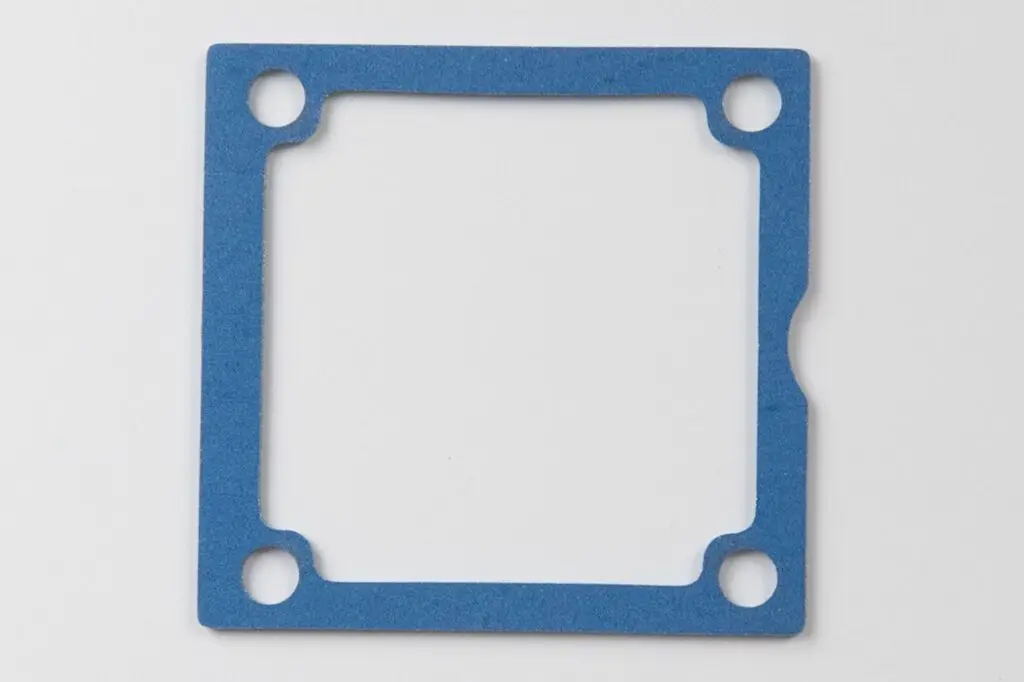
Specialty Silicone Products (SSP) manufactures high-performance EMI/RFI shielding gaskets with low minimum order quantities (MOQs) and fast turnaround times.
As an ITAR-registered, Made in the USA manufacturer, we compound our own conductive silicone elastomers and machine our own tooling in-house under strict ISO 9001:2015 quality standards.
Whether you need standard EMI gaskets in MIL-DTL-83528 slash sizes or custom, made-to-order profiles, SSP delivers the precision shielding your aerospace, defense, and industrial electronics require.
SSP’s conductive elastomers combine environmental sealing, thermal stability, and maximum electromagnetic interference (EMI) shielding effectiveness. By filling silicone or fluorosilicone base elastomers with conductive metal particles, we transform a natural insulator into a highly conductive shielding interface.
Base Elastomer | Conductive Filler | Core Benefit / Application |
Silicone | Silver-Aluminum (Ag/Al) | MIL-DTL-83528 QPL performance; premium aerospace shielding |
Silicone | Nickel-Graphite (Ni/C) | High-shielding effectiveness; highly cost-effective commercial alternative |
Fluorosilicone | Silver-Aluminum (Ag/Al) | Military performance + resistance to jet fuels, solvents, and hydraulic fluids |
Fluorosilicone | Nickel-Graphite (Ni/C) | Chemical resistance combined with cost-effective commercial shielding |
Silicone | Silver-Copper (Ag/Cu) | Maximum electrical conductivity; ideal for critical waveguide applications |
We compound and fabricate EMI gaskets across ten specialized performance categories to match your exact application parameters:
MIL-DTL-83528 QPL Certified: Approved materials for stringent military and defense systems.
Corrosion-Resistant: Co-extruded or specialized fillers designed to prevent galvanic corrosion against mating aluminum surfaces.
Low Shore A / Soft: Low-durometer formulations for fragile enclosures or low closure-force applications.
Fuel & Solvent Resistant: Fluorosilicone-based options that resist degradation from harsh chemicals, fuels, and lubricants.
Low Outgassing: Certified to ASTM E595 standards for space-grade applications and high-vacuum environments.
Flame Retardant: Formulations meeting UL 94 V-0 compliance criteria for consumer electronics and mass transit.
Reinforced: Woven wire mesh or fiberglass-supported sheets for high-pressure or high-tear environments.
Non-Silicone Based: Alternative fluorocarbon or hydrocarbon matrix solutions for silicone-sensitive cleanroom spaces.
Looking for CHO-SEAL® or Jabar Alternatives? SSP offers direct drop-in alternatives to Parker Chomerics CHO-SEAL®, Nolato Jabar, and Schlegel EMI materials, helping you bypass long lead times without sacrificing shielding or environmental performance.
We convert our proprietary shielding silicones and fluorosilicones from raw compounds, sheets, rolls, and extrusions into finished parts using four primary, tight-tolerance manufacturing processes.
Die cutting provides incredible uniformity for high-volume production runs. SSP machines all cutting steel-rule dies in-house to ensure rapid turnarounds and perfect geometric compliance.
Best For: Flat, complex geometries, connector gaskets, and flange seals.
Options: Available with conductive or non-conductive pressure-sensitive adhesives (PSA) for a simple peel-and-stick installation.
Utilizing advanced CNC knife-cutting tables, flash cutting eliminates the need for physical tooling entirely. It reads directly from your CAD files to produce extremely smooth, high-precision edges.
For complex cross-sections, three-dimensional profiles, or high-yield picture-frame gaskets, compression molding is our premier manufacturing path. It places preformed conductive compound into a heated mold cavity to cross-link the material under high pressure.
Best For: Standard O-rings, rectangular D-rings, specialized connector gaskets, and minimizing material scrap on large hollow profiles.
We extrude conductive profiles in infinite continuous lengths (solid cord, hollow tubes, D-strips, and P-strips). These profiles can then be joined into continuous loops using two methods:
Hot Splicing: Applying heat and conductive vulcanizing compound to create a continuous, seamless joint with no physical “hard spot.”
Cold Bonding: Utilizing conductive RTV silicone adhesives for fast, on-site assembly and rapid turnaround requirements.
Achieving optimal enclosure shielding effectiveness requires balancing both mechanical compression and electrical transfer impedance. When specifying your gasket layout, prioritize the following factors:
Deflection & Closure Force: Conductive fillers significantly increase the durometer and compression set resistance of raw silicone. Ensure your enclosure latches or bolts provide enough torque to hit the target deflection curve (typically 10% to 20% compression) without warping the metal flange.
Galvanic Compatibility: To prevent corrosion, pair your enclosure metal with a filler particle close to it on the galvanic scale. For example, silver-aluminum filled elastomers pair excellently with aluminum housings, while nickel-graphite offers solid all-around compatibility across multiple metallic interfaces.
Hole and Edge Placement: For die-cut configurations, maintain a wall thickness of at least equal to the material thickness between any bolt holes and the outer gasket edge to prevent tearing during assembly.
The primary difference lies in chemical resistance. Standard silicone provides excellent environmental sealing and thermal stability (typically -55°C to +200°C), making it ideal for standard aerospace and industrial enclosures. However, standard silicone swells and degrades when exposed to fuels, oils, and solvents. Fluorosilicone features a modified polymer backbone that resists chemical breakdown, making it the required choice for military marine applications, automotive fuel systems, and aerospace environments where exposure to jet fuel or hydraulic fluids is likely.
To minimize galvanic corrosion, the metal filler in the elastomer should be as closely matched as possible to the mating metal of your enclosure on the galvanic scale. For example, if you are sealing a conversion-coated aluminum enclosure, a silver-aluminum (Ag/Al) or nickel-graphite (Ni/C) filled elastomer provides excellent galvanic compatibility. Avoid using silver-copper filled gaskets against aluminum surfaces in marine or high-humidity environments, as the large electrochemical potential difference will rapidly accelerate corrosion of the aluminum flange.
Yes. EMI gaskets can be custom fabricated with either standard non-conductive PSA or electrically conductive PSA. Non-conductive adhesive is typically applied as a narrow strip down the center of the gasket surface, ensuring that the exposed conductive elastomer still makes direct metal-to-metal contact with the flange when compressed. Conductive PSA uses an adhesive matrix embedded with conductive particles, allowing for full-width coverage while maintaining electrical continuity across the joint, though it typically exhibits a slightly higher transfer impedance than bare elastomer contact.
For optimal shielding effectiveness and environmental sealing, most conductive silicone elastomers are designed for a nominal deflection of 10% to 20% of their uncompressed height. Compressing the material less than 10% may fail to establish adequate electrical contact or environmental sealing. Over-compressing the material (greater than 30%) can cause the elastomer to take a permanent compression set, damage the structural matrix of the metal fillers, or warp lightweight enclosure flanges, which paradoxically creates gap leaks for electromagnetic radiation.
Specialty Silicone Products compounds direct, drop-in alternatives to major industry material designations, including Parker Chomerics CHO-SEAL® profiles. For instance, our MIL-DTL-83528 QPL certified silver-aluminum filled silicones and fluorosilicones match the shielding effectiveness, continuous use temperatures, and volume resistivity standards of premium military grades. Because we compound our own materials and tool our dies completely in-house, we can deliver these drop-in alternatives with drastically lower minimum order quantities and faster production lead times.