
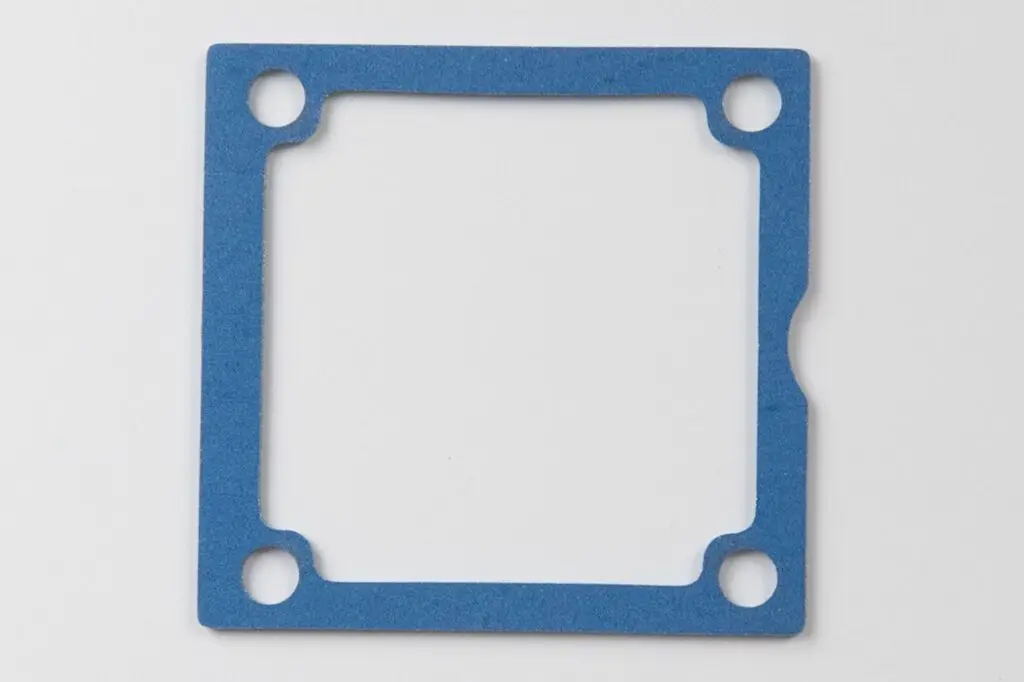
Specialty Silicone Products (SSP) manufactures high-performance EMI/RFI shielding gaskets with low minimum order quantities (MOQs) and fast turnaround times.
As an ITAR-registered, Made in the USA manufacturer, we compound our own conductive silicone elastomers and machine our own tooling in-house under strict ISO 9001:2015 quality standards.
Whether you need standard EMI gaskets in MIL-DTL-83528 slash sizes or custom, made-to-order profiles, SSP delivers the precision shielding your aerospace, defense, and industrial electronics require.
Specialty Silicone Products (SSP) compounds high-performance silicone EMI gasket material formulations engineered to deliver superior environmental sealing, thermal stability, and maximum electromagnetic interference (EMI) attenuation.
Available in molded conductive sheets, continuous rolls, and extruded profiles, each EMI gasket material combines high shielding effectiveness with continuous temperature tolerance (-55°C to +200°C).”
Whether your application requires conductive silicone EMI sheet stock, silicone EMI gasket roll stock, or raw molding compounds, all of our silicone EMI gasket materials are manufactured in-house under strict ISO 9001:2015 quality standards to ensure lot-to-lot electrical and mechanical consistency.
| Base Elastomers | Conductive Filler | EMI Silicone Gaskets Availability | Durometer Range (Shore A) | EMI Gasket Material Specs |
Silicone | Silver-Aluminum (Ag/Al) | Molded Sheets, Continuous Rolls | 45 – 75 | MIL-DTL-83528 QPL. Premium silicone EMI gasket material for military & aerospace shielding. |
Silicone | Nickel-Graphite (Ni/C) | Molded Sheets, Continuous Rolls | 30 – 85 | Commercial Grade. High-shielding conductive silicone material with excellent corrosion resistance. |
Fluorosilicone | Silver-Aluminum (Ag/Al) | Molded Sheets, Continuous Rolls | 50 – 75 | Fuel/Solvent Resistant. Fluorosilicone EMI gasket material engineered for harsh chemical exposure. |
Fluorosilicone | Nickel-Graphite (Ni/C) | Molded Sheets, Continuous Rolls | 40 – 80 | Chemical Commercial Grade. Combines solvent resistance with cost-effective commercial shielding. |
Silicone | Silver-Copper (Ag/Cu) | Molded Sheets, Continuous Rolls | 60 – 80 | Maximum Conductivity. High-performance silicone material for waveguide & high-frequency EMP protection. |
SSP’s electrically conductive silicones offer these properties:
Broad Temperature Range: Continuous operating limits from -55°C to +200°C (-67°F to +392°F) across standard silicone and fluorosilicone grades.
Versatile Form Factors: Supplied as conductive silicone sheet stock (12″ x 12″ and 15″ x 20″), continuous silicone EMI gasket roll stock in widths up to 15 inches, or custom-fabricated die-cut parts.
Durometer Flexibility: Formulated across soft-to-firm durometer ranges (30 to 85 Shore A) to accommodate delicate, low closure-force housings or heavy-duty military enclosures.
Low Outgassing Variants: Select grades certified to ASTM E595 vacuum testing requirements for space-grade electronics and high-vacuum optic enclosures.
Adhesive Integration: Available laminated with non-conductive pressure-sensitive adhesive (PSA) mounting strips or z-axis electrically conductive PSA for full-width bonding.
Choosing the correct polymer base is critical to ensuring long-term gasket reliability in demanding field environments:
Standard Conductive Silicone: Provides exceptional weatherability, UV resistance, thermal endurance, and mechanical recovery. Standard silicone is the preferred material choice for military electronics, commercial enclosures, outdoor telecom infrastructure, and industrial controls where direct exposure to aggressive fuels or solvents is not present.
Fluorosilicone EMI Gasket Materials: Features a modified fluorinated polymer backbone that resists swelling, softening, and chemical breakdown when exposed to jet fuel, hydraulic fluids, lubricants, diesel, and industrial solvents. Fluorosilicone is required for military marine applications, aerospace fuel systems, engine bays, and automotive chemical environments.
We compound and fabricate both silicone EMI gasket materials and fluorosilicone EMI gasket materials.
EMI gaskets across ten specialized performance categories to match your exact application parameters:
MIL-DTL-83528 QPL Certified: Approved materials for stringent military and defense systems.
Corrosion-Resistant: Co-extruded or specialized fillers designed to prevent galvanic corrosion against mating aluminum surfaces.
Low Shore A / Soft: Low-durometer formulations for fragile enclosures or low closure-force applications.
Fuel & Solvent Resistant: Fluorosilicone-based options that resist degradation from harsh chemicals, fuels, and lubricants.
Low Outgassing: Certified to ASTM E595 standards for space-grade applications and high-vacuum environments.
Flame Retardant: Formulations meeting UL 94 V-0 compliance criteria for consumer electronics and mass transit.
Reinforced: Woven wire mesh or fiberglass-supported sheets for high-pressure or high-tear environments.
Non-Silicone Based: Alternative fluorocarbon or hydrocarbon matrix solutions for silicone-sensitive cleanroom spaces.
Looking for CHO-SEAL® or Jabar Alternatives? SSP offers direct drop-in alternatives to Parker Chomerics CHO-SEAL®, Nolato Jabar, and Schlegel EMI materials, helping you bypass long lead times without sacrificing shielding or environmental performance.
Note: SSP makes fuel-resistant fluorosilicone EMI materials as well as fluorosilicones that are electrically insulating.
We convert our proprietary conductive elastomers into high-precision EMI silicone gaskets using die cutting, flash cutting, compression molding, and extrusions. Whether you need standard MIL-DTL-83528 slash sizes or custom profiles with conductive PSA, our EMI silicone gaskets deliver environmental sealing and electrical continuity.
Plus, compared to some other EMI gasket manufacturers, SSP offers lower minimum order quantities and faster lead tiems.
Die cutting provides incredible uniformity for high-volume production runs. Explore our full range of die cut EMI gaskets and conductive materials or consult our engineers for custom die tooling.
Best For: Flat, complex geometries, EMI connector gaskets, and flange seals.
Options: Available with conductive or non-conductive pressure-sensitive adhesives (PSA) for a simple peel-and-stick installation.
Utilizing advanced CNC knife-cutting tables, flash cutting eliminates the need for physical tooling entirely. It reads directly from your CAD files to produce extremely smooth, high-precision edges.
For complex cross-sections, three-dimensional profiles, or high-yield picture-frame gaskets, compression molding is our premier manufacturing path. It places preformed conductive compound into a heated mold cavity to cross-link the material under high pressure.
Best For: Standard O-rings, rectangular D-rings, specialized connector gaskets, and minimizing material scrap on large hollow profiles.
We extrude conductive profiles in infinite continuous lengths (solid cord, hollow tubes, D-strips, and P-strips). These profiles can then be joined into continuous loops using two methods:
Hot Splicing: Applying heat and conductive vulcanizing compound to create a continuous, seamless joint with no physical “hard spot.”
Cold Bonding: Utilizing conductive RTV silicone adhesives for fast, on-site assembly and rapid turnaround requirements.
Achieving optimal enclosure shielding effectiveness requires balancing both mechanical compression and electrical transfer impedance. When specifying your gasket layout, prioritize the following factors:
Deflection & Closure Force: Conductive fillers significantly increase the durometer and compression set resistance of raw silicone. Ensure your enclosure latches or bolts provide enough torque to hit the target deflection curve (typically 10% to 20% compression) without warping the metal flange.
Galvanic Compatibility: To prevent corrosion, pair your enclosure metal with a filler particle close to it on the galvanic scale. For example, silver-aluminum filled elastomers pair excellently with aluminum housings, while nickel-graphite offers solid all-around compatibility across multiple metallic interfaces.
Hole and Edge Placement: For die-cut configurations, maintain a wall thickness of at least equal to the material thickness between any bolt holes and the outer gasket edge to prevent tearing during assembly.
When specifying conductive elastomeric shielding for electronic enclosures, the terms EMC gasket and EMI gasket are frequently used interchangeably. While both rely on conductive silicone and fluorosilicone elastomers to achieve attenuation, they reflect different scopes within electromagnetic protection engineering.
While the underlying conductive materials (such as nickel-graphite, silver-aluminum, or passivated silver-copper filled silicones) overlap, the design intent differs:
| Feature | EMI Gasket | EMC Gasket |
| Primary Function | Blocks EMI/RFI signals from entering or exiting a mating surface/seam. | Helps the entire enclosure/system achieve full electromagnetic compatibility. |
| Engineering Scope | Narrow: Focused on localized joint shielding and decibel (dB) attenuation. | Broad: Integrates EMI/RFI shielding, ESD protection, and environmental sealing. |
| Target Standards | Component-level performance, MIL-DTL-83528, MIL-STD-461, CISPR. | System-level compliance standards, including FCC, CE Mark, and DEF STAN. |
| Typical Application | Connector flanges, EMI waveguide gaskets, access panel seams, O-rings. | Complete electronic enclosures, outdoor enclosures, military ground vehicles. |
| Material Profile | Conductive silicone elastomers, fluorosilicones, conductive fabric. | Conductive elastomers, often paired with dual-extrusion IP67/IP68 water seals. |
To achieve full system-level EMC compliance, engineers must evaluate both electrical performance and mechanical environment requirements:
When conductive elastomers contact metallic housings (such as aluminum, stainless steel, or magnesium), galvanic corrosion can degrade joint conductivity over time. Selecting passivated filler materials—such as nickel-graphite or silver-aluminum filled silicones—ensures low contact resistance while mitigating galvanic activity in corrosive or high-humidity environments.
An effective EMC gasket design often serves a dual role: blocking high-frequency radiation while simultaneously sealing against environmental contaminants. Specialty Silicone Products (SSP) manufactures conductive elastomers that meet both MIL-DTL-83528 conductivity standards and IP67/IP68 ingress protection requirements.
Electromagnetic shielding performance relies on consistent physical contact along the entire seam interface. Choosing high-flexibility, soft durometer silicones (e.g., 30 to 40 Shore A) allows lower closure forces while maintaining long-term resistance to compression set across temperature extremes (-55°C to +200°C).
Specialty Silicone Products (SSP) formulates and manufactures high-performance conductive silicone and fluorosilicone materials designed for both spot-level EMI attenuation and full-system EMC certification:
Nickel-Graphite Conductive Silicones: Cost-effective, highly conductive elastomers engineered for commercial electronics and defense platforms requiring high shielding effectiveness paired with corrosion resistance.
Silver-Aluminum Conductive Silicones: MIL-DTL-83528 QPL-certified materials offering high attenuation for critical military and aerospace enclosures.
Fluorosilicone EMI Elastomers: Formulated for aggressive chemical environments where resistance to fuels, solvents, Skydrol, and hydraulic fluids is mandatory.
A silicone EMI gasket material is an elastomeric compound engineered by combining a base silicone polymer with conductive metallic fillers (such as silver-aluminum, nickel-graphite, or silver-copper). The silicone base provides environmental sealing, thermal stability (-55°C to +200°C), and mechanical flexibility, while the embedded metal particles create an electrically conductive pathway to block electromagnetic interference (EMI) and radio frequency interference (RFI).
Standard conductive silicone EMI materials offer superior environmental sealing and thermal endurance for general aerospace, defense, and industrial electronics. Fluorosilicone EMI materials utilize a modified polymer backbone designed specifically to resist chemical breakdown, swelling, and degradation when exposed to jet fuels, solvents, hydraulic fluids, and oils.
To minimize galvanic corrosion, the metal filler in the elastomer should be as closely matched as possible to the mating metal of your enclosure on the galvanic scale. For example, if you are sealing a conversion-coated aluminum enclosure, a silver-aluminum (Ag/Al) or nickel-graphite (Ni/C) filled elastomer provides excellent galvanic compatibility. Avoid using silver-copper filled gaskets against aluminum surfaces in marine or high-humidity environments, as the large electrochemical potential difference will rapidly accelerate corrosion of the aluminum flange.
Yes. EMI gaskets can be custom fabricated with either standard non-conductive PSA or electrically conductive PSA. Non-conductive adhesive is typically applied as a narrow strip down the center of the gasket surface, ensuring that the exposed conductive elastomer still makes direct metal-to-metal contact with the flange when compressed. Conductive PSA uses an adhesive matrix embedded with conductive particles, allowing for full-width coverage while maintaining electrical continuity across the joint, though it typically exhibits a slightly higher transfer impedance than bare elastomer contact.
For optimal shielding effectiveness and environmental sealing, most conductive silicone elastomers are designed for a nominal deflection of 10% to 20% of their uncompressed height. Compressing the material less than 10% may fail to establish adequate electrical contact or environmental sealing. Over-compressing the material (greater than 30%) can cause the elastomer to take a permanent compression set, damage the structural matrix of the metal fillers, or warp lightweight enclosure flanges, which paradoxically creates gap leaks for electromagnetic radiation.
Specialty Silicone Products compounds direct, drop-in alternatives to major industry material designations, including Parker Chomerics CHO-SEAL® profiles. For instance, our MIL-DTL-83528 QPL certified silver-aluminum filled silicones and fluorosilicones match the shielding effectiveness, continuous use temperatures, and volume resistivity standards of premium military grades. Because we compound our own materials and tool our dies completely in-house, we can deliver these drop-in alternatives with drastically lower minimum order quantities and faster production lead times.
Yes. Every EMC gasket functions as an EMI gasket at the physical interface. However, achieving full system EMC compliance requires considering additional factors beyond joint shielding—such as grounding paths, electrostatic discharge (ESD) management, and environmental sealing.
Component shielding effectiveness is typically evaluated using standards like MIL-DTL-83528 or IEEE 299. Overall system compliance is governed by regulatory standards such as FCC Part 15, CE Mark (EN 61000 series), MIL-STD-461, and DO-160.
Selection depends on your target attenuation (dB), galvanic match with the enclosure substrate, fluid exposure requirements, and operating temperature range.
A conductive elastomer gasket is made of a rubber material that contains specialized fillers. Normally, elastomers are electrically insulating rather than electrically conductive. That means they prevent rather than permit the flow of electric current. With conductive elastomer gaskets, however, the base rubber is compounded with metal, bimetallic, or bimetallic particles that conduct electricity.